Small Business
24 Minute
SEND Website Design: Why Clarity and Credibility Matter for Alternative Provisions

What we learned delivering a SEND website for Fields of Dreams Farm in Buckinghamshire.
When a parent, carer, or professional visits a SEND provision website, they’re rarely browsing casually. They’re usually looking for reassurance, understanding, and clarity often during a stressful or uncertain time.
In our experience working with SEND and care-led organisations across Buckinghamshire and Milton Keynes, one thing is clear:
a website plays a far bigger role than simply explaining services.
- It builds trust.
- It sets expectations.
- And in many cases, it determines whether someone feels confident enough to make contact at all.
Our recent work with Fields of Dreams Farm, based in Aylesbury, Buckinghamshire, highlighted just how important thoughtful website design is and why many provisions struggle to communicate their work effectively online, even when they’re doing incredible things offline.

Common SEND Website Design Challenges We See
SEND provision covers a broad and complex range of needs. From SEMH and neurodiversity to trauma-informed care, alternative education, and therapeutic support. No two provisions are the same, and no two young people are either.
Yet many SEND websites unintentionally present themselves as if they are.
This often happens because:
- Services are grouped together too broadly
- Language assumes prior knowledge of SEND terminology
- Websites try to speak to everyone at once and end up resonating with no one
Families visiting these sites may already feel overwhelmed. If they can’t quickly understand who a provision supports, how sessions work, or whether it’s the right fit, they’re likely to leave. Not because the provision isn’t right, but because the website hasn’t guided them clearly enough.
Fields of Dreams Farm: A Local Provision with a Strong Ethos
Fields of Dreams Farm is a nurturing alternative provision supporting children and young people aged 8–18 with SEND and SEMH needs, including those who have experienced trauma. Based in Aylesbury, they work with families and professionals across Buckinghamshire and the surrounding areas, including referrals from Milton Keynes.
What stood out immediately was the depth of care behind the provision. The team bring lived experience, empathy, and genuine understanding. Their programmes are bespoke and child-led, meeting each young person where they are not forcing them into a predefined model.
However, despite the strength of the provision itself, their previous website wasn’t telling that story clearly.
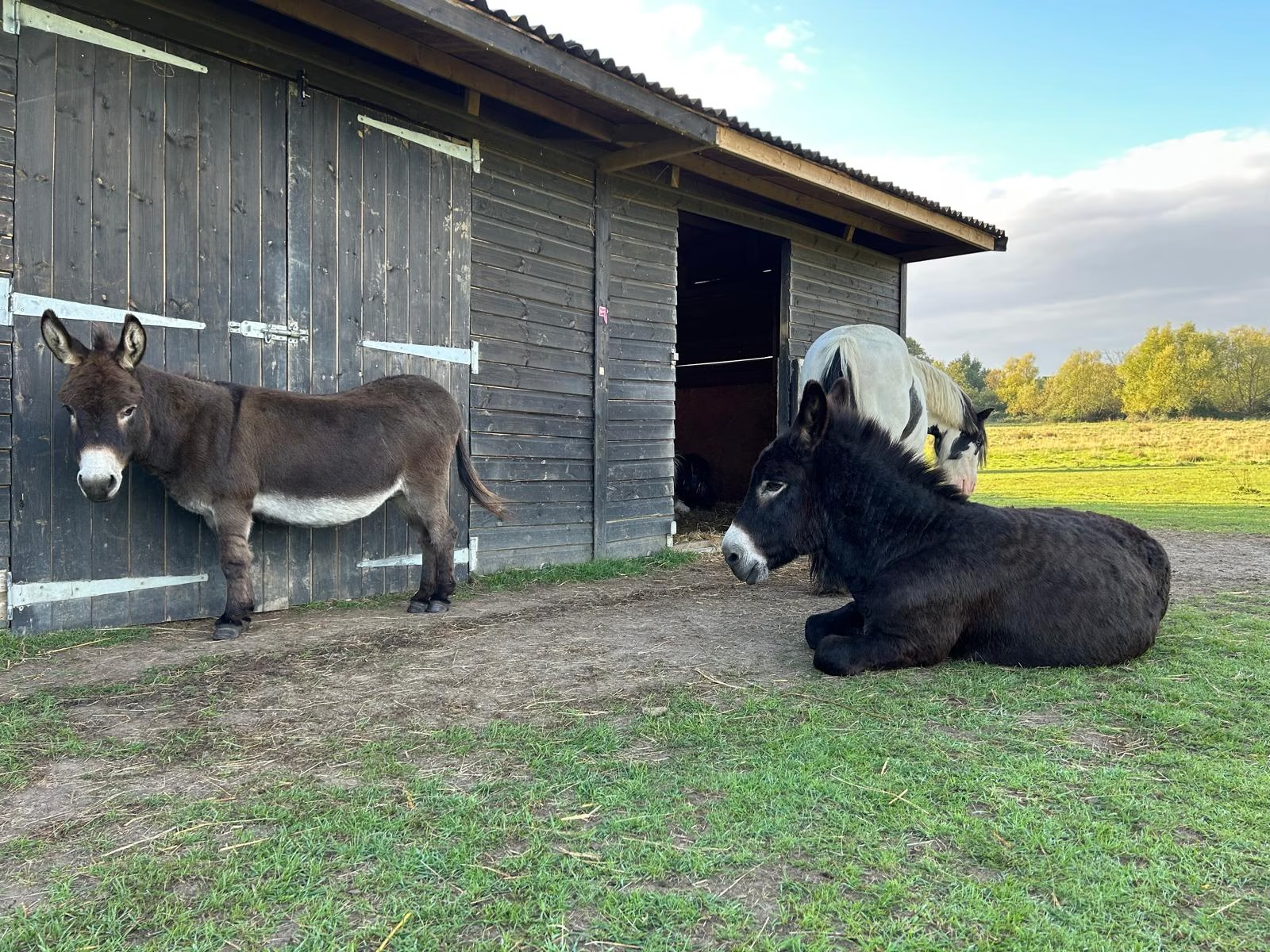
Visitors were often assuming Fields of Dreams Farm was a public-facing farm, rather than a specialist alternative provision. This confusion alone was enough to prevent the right enquiries from coming through and they often found people visiting them just to see the animals! Which shouldn’t have been the case as all of these animals are specifically for SEND children.
This project became a strong example of our approach to SEND website design; including another project that we worked on for Youth Inspired who are supporting young adults but are based in Bedfordshire.
Why Credibility Is Essential in SEND
One of the most significant insights from this project was just how much credibility matters to families, carers, and referring professionals.
Parents aren’t just looking for warmth, they’re looking for reassurance that:
- Their child will be safe
- Staff are experienced and knowledgeable
- The provision is structured, professional, and accountable
Accreditations, future plans (such as OFSTED registration), clear policies, and professional branding all contribute to this sense of trust.
This is particularly relevant for SEND provisions in areas like Milton Keynes and Buckinghamshire, where families may be comparing multiple options across local authority boundaries.
A website that feels unclear, outdated, or overly informal can unintentionally undermine confidence. Even if the provision itself is outstanding!
How Clear Language Improves SEND Provision Websites
Another key learning from this project was the importance of accessible language.
SEND terminology is complex, and it’s easy to assume that everyone understands it but that’s rarely the case. Parents new to SEND, carers, and even some professionals may not be familiar with specific terms or acronyms.
During this project, we spent time learning and clarifying language ourselves. That process reinforced an important principle we apply across all SEND websites:
Clear does not mean simplistic. It means inclusive.
For Fields of Dreams Farm, this meant:
- Explaining services in plain English.
- Avoiding unnecessary jargon.
- Structuring content so visitors could quickly find what applied to them.
Rather than overwhelming users with information, the website now guides them gently helping them understand the support available without feeling lost or intimidated.
Separating Services Instead of Forcing a Fit
One mistake we often see in SEND website design is trying to present all services as a single offering. While this may feel simpler internally, it can create confusion externally.
Every young person’s needs are different. Parents want to see that those differences are recognised and respected.
For Fields of Dreams Farm, separating out sessions and support types helped:
- Make services feel more personalised.
- Reassure families that their child wouldn’t be expected to “fit a mould”.
- Improve clarity for referrers and professionals.
This approach is particularly important for provisions working across Milton Keynes and surrounding areas, where referrals may come from multiple sources, each with different expectations and requirements.
Designing SEND Websites for Growth and OFSTED Readiness
Another important behind-the-scenes decision was recognising what not to include yet.
Fields of Dreams Farm has plans to expand their offering in the future, including courses that will be developed further in 2026. Rather than rushing these onto the website prematurely, we made a strategic decision to wait.
Why? Because good website design is informed by real user behaviour.
By gathering data on how people interact with the site. What they read, where they click, what questions they ask. Future content can be built around actual needs, not assumptions.
This is an approach we often recommend to SEND organisations and charities across Milton Keynes: your website should evolve alongside your provision, not try to do everything from day one.
Key Lessons for SEND Provisions
While every organisation is different, there are consistent lessons we see across SEND website projects:
- Clarity builds confidence: Visitors should understand who you support within seconds
- Credibility reassures families: Professional design, clear structure, and transparent information matter
- Language should invite, not exclude: Plain English helps more people feel supported and understood
- Services deserve space: Separating offerings shows care and intentionality
- Websites should grow with you: Not everything needs to be live immediately
These principles apply whether you’re based across the UK!
More Than a Website
For us at Blue Cheese Digital, projects like this reinforce why SEND websites requires a different approach.
These websites are not standard marketing tools. They sit at the intersection of education, care, and wellbeing. They carry emotional weight, and they influence real-life decisions that affect children and families.
The new Fields of Dreams Farm website now reflects the professionalism, warmth, and purpose of the provision itself. Making it easier for families, carers, and professionals across Buckinghamshire to understand the support available and feel confident in reaching out.
If This Sounds Familiar…
If you run a SEND provision, alternative education service, or care-led organisation. Whether in Milton Keynes, Buckinghamshire, or the surrounding areas and feel your website doesn’t reflect the quality of your work, our website design team would be happy to talk!
Sometimes, the difference between confusion and confidence is simply clarity.
Tagged with :