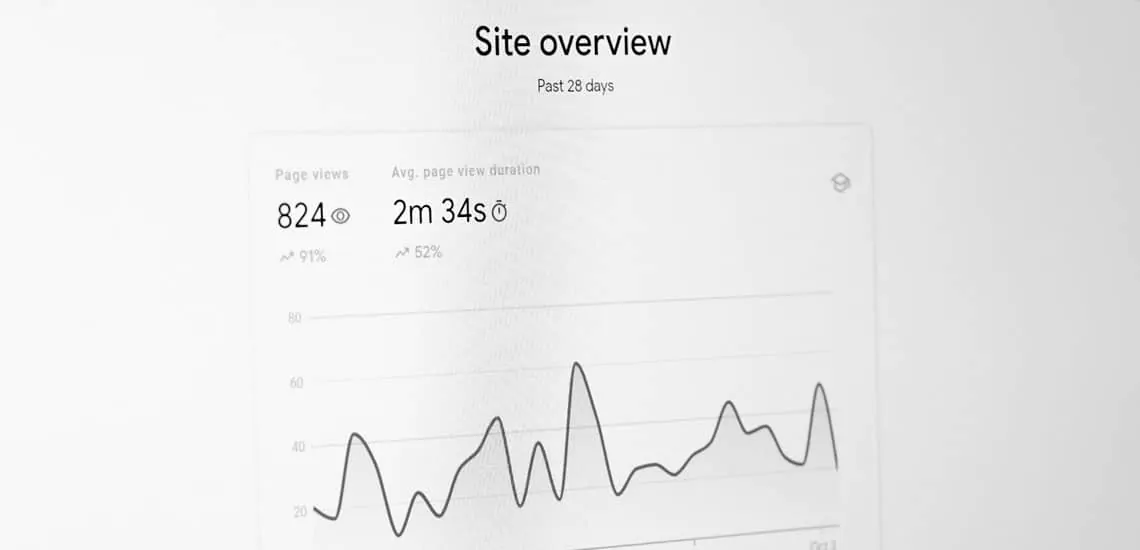
Quality content can stand the test of time. Perhaps you can think back to a really great blog you wrote, which at the time, performed really well and ranked highly on Google?
Over time, your web page might have gone down the rankings; but all is not lost. We’re going to explain how to bring your content back from the dead and give your it a new lease of life.
Think of recycling. It’s kind of like that. Giving new life to something that in the past was useful, but in amongst new, shiny content, might seem like it no longer has any use. But it does!
We’ll give you the tools and know-how to breathe new life into your old content; giving your website a ‘shot in the arm’.
Why does updating content help boost rankings?
Whenever you Google something, 95% of the time you’re going to see ‘Wikipedia’ at the top. That’s because it’s regularly updated by 100’s of thousands of people, usually each day.
Google loves FRESH CONTENT. Blog posts or web pages that have recently been published will most likely rank higher than older content. If you’re writing lots of content around news or trends, it’s highly likely that over time it will disappear from the top rankings. This is due to the fact its relevance is to the past and not the present.
This is why we recommend creating ‘Evergreen content’. Evergreen content is content that isn’t time-sensitive and can be updated regularly; or added to. An example of great evergreen content is ‘how-to guides’. These can be updated regularly, or added too, when technology changes or progresses.
Which pages should I update on my website?
The best place to start when making this decision is your analytics. ‘Search Console’ is the place to look. With Search Console, you can view and search all the keywords that users use to find your website and the correlating pages.
Concentrate on pages that have a high number of impressions first. This will be an easier task than updating pages that have low impressions. If a page has high impressions it means people are interested in this topic. David Schneider, a SEO expert, has written some recommendations on the pages that you should be updating on your website through Search Console:
- A CTR lower than 1%
- A position that stands between 1 and 30
- A “high” impression rate (this one will depend on the amount of traffic your blog/web page in question normally receives)
During this process, make sure you change the publish date to the new date. Changing the date to the present will alert Google to know the blog or webpage has been updated and has fresh content.
Tip – When updating web pages, don’t change the URL of the post unless you feel it’s necessary. You could find yourself losing traffic to the page and taking people to a 404 page. If you do update the page URL ensure that you’re using a 301 redirect.
Find new keywords
After time, you will find that keywords you’ve used in your web pages are no longer relevant (or popular) in searches used to find your content. By taking a look through Search Console, you can find queries that have been used to find your website or blog articles.
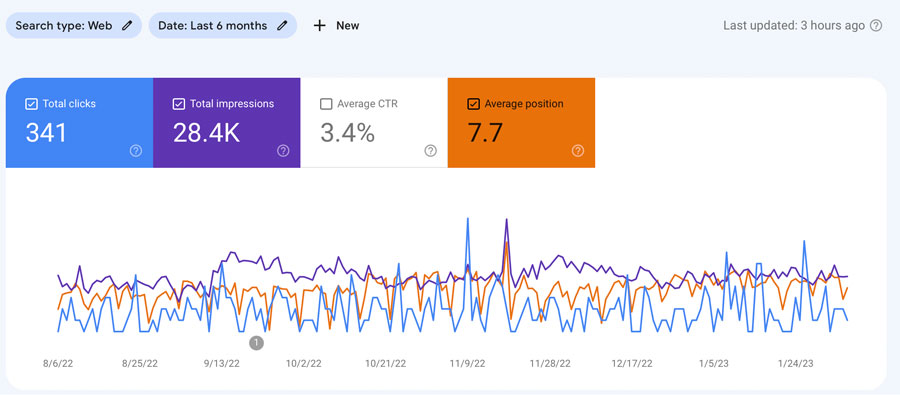
When you have found the top query, use that as your focus keyword, as long as the keyword is relevant to the page. The rest of the keywords can be used as secondary keywords; which can be added to relevant pages.
Delete content that is no longer in use
Most content on your website can be updated. On some occasions you will even find that some of the content is no longer needed.
This content could be old products or services that you no longer offer anymore; employee profiles who no longer work at your organisation; or even duplicate content.
Rather than just deleting the content, put a 301 redirect in place. If you decide to delete content without a 301 redirect, you will take people to a 404 error page on your website; risking people potentially leaving your website because they are taken to a page that no longer exists.
A 301 redirect is very useful. You can point users to content that is similar to the original content, whilst alerting Google and other search engines that the page no longer exists. That said, don’t go too crazy with 301’s. You don’t want too many as they can put a heavy load on your server; decreasing the speed of your website.
It’s all about balance.
Key points to take away
Old content on your website has so much potential; you just need to know how to optimise it. See which web pages perform well on your analytics and make some tweaks (and delete content that is no longer relevant).
As we’ve explained, webpages such as Wikipedia are always going to come out on top on Google and other search engines, because it’s regularly updated. This keeps it ‘fresh’.
By updating web pages on your website you will give it a new lease of life; increasing the likelihood of a rankings boost on Google and other search engines.
Tagged with :